Skip to content

Fuel and recover

Give your body what it needs

Food, drink & lifestyle


The recommended weekly limit is 14 units. Try to have two alcohol free days a week. Regularly exceeding this can seriously damage your health. It will also increase your body weight, with a single pint containing 233 calories.

  • Alcohol is a toxin. Regularly drinking more than the recommended daily limits can lead to serious health problems (e.g. liver disease, high blood pressure, reduced fertility, increased risk of heart attack, stroke and cancer). 
  • Alcohol is energy-dense and a high intake can lead to an increase in body weight. 
  • Reducing your alcohol content means you will reduce your risk of ill-health, and you could also look better, feel happier and more relaxed, sleep better, have more energy, have more time and money to spend on doing other things, and you might lose some weight. You will also be less vulnerable on nights out. 
  • For more information visit the Drink Aware website.

Keeping hydrated can help maintain physical and mental performance. Make sure you drink enough fluid to replace your daily losses. Be aware that if you are exercising hard then you may lose more water from sweating. Choose low sugar fluids such as water and milk. 

If you have well balanced diet that provides the energy you need to train, you shouldn’t need any supplements. 

You might need to reduce your calorie intake to control your weight. If you do, make sure you avoid the most common dieting mistakes. These include; fasting, skipping meals and using slimming pills. 

Good nutrition is important during exercise training to provide your body with adequate energy to support physical changes and to optimise recovery. 

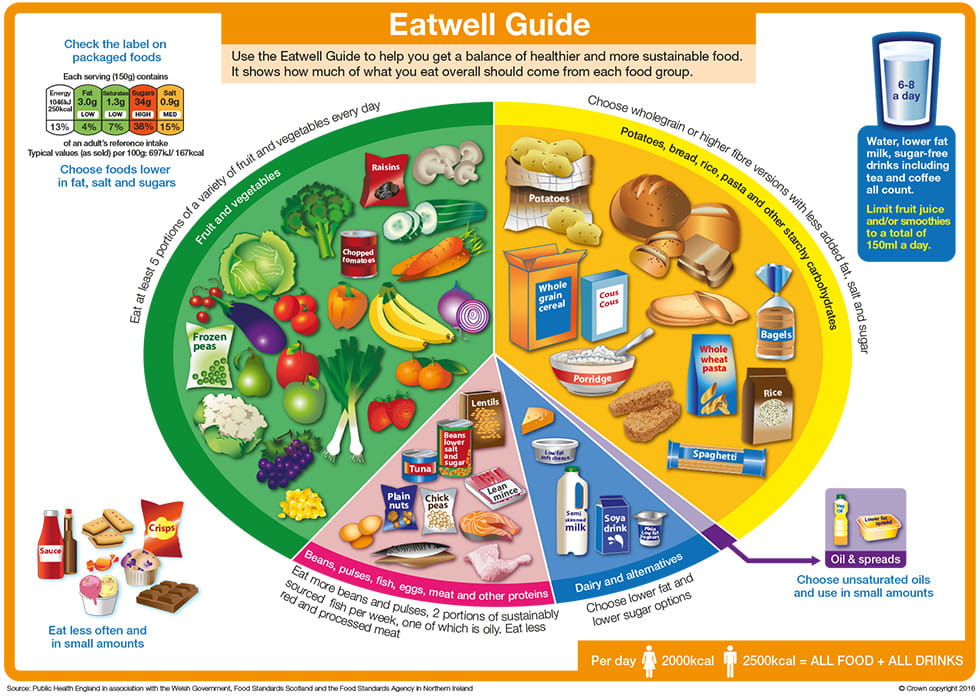
To be healthy and to support your training it is important that you eat a balanced diet. The Eatwell Guide shows how much of what you eat should come from each food group. Use this to guide your food and drink choices throughout the day. 

Click here for more information on healthy eating. 

You can still eat out and enjoy the odd takeaway, but it’s important to choose healthy options that don’t contain lots of salt and saturated fats. 

Preparing your own healthy food is generally the best way to stay fit, but it’s not always possible, and sometimes you’ll fancy a treat or want to enjoy a special occasion. If you’re eating out or having a takeaway, it doesn’t mean abandoning your diet. Things to consider, include: 

  • Choose a healthy option – Some restaurants list the calorie content of their food and drinks. Try to choose something that won’t push you over your recommended calorie intake. 
  • Food swaps – You can enjoy healthy, tasty food by swapping some of the ingredients in the dish you order. For example: 
  1. Eat chicken instead of sausages 
  2. Eat food with a tomato sauce instead of a creamy sauce 
  3. Eat boiled rice instead of fried rice 
  4. Eat a baked potato instead of mash 
  • Healthy lunches – Try to avoid food that is high in fat and full of sugars. Try pasta salads with lean meat, sandwiches with wholemeal bread, and baked potatoes with beans. 
  • Don’t over order – Choosing a takeaway, especially as a group, often leads to over ordering. Having lots of food leftover can mean that you graze, and eat more than you should. Try to be strict with portion control. 
  • Healthier takeaways – Some takeaways are better for you than others. You can still order food you like, without consuming unnecessary calories. For example: 
  1. Order a pizza with a thin base and lean meat toppings 
  2. Choose fish that’s coated in breadcrumbs 
  3. Look for Chinese food that is steamed instead of fried 
  4. Choose a shish kebab over a doner kebab 
  5. Order a tandoori or tomato based curry 

Getting fit to join the Royal Navy doesn’t mean you have to stop enjoying yourself, but it is important you keep track of what food you eat and are moderate with treats like takeaways. You can strike a balance by remembering these key principles, so you don’t undo your hard work.

Energy density is the amount of calories per gram of food. Choosing foods with a lower energy density allows you to fuel your training, eat larger portions, and lose weight without feeling hungry. Foods that will fill you up more, include: 

  • Fruit and vegetables – Fresh, tinned or frozen 
  • Low-fat dairy – Semi-skimmed, 1% fat or skimmed milk, and low-fat or fat-free yoghurt 
  • Beans and peas – Red kidney beans, chickpeas, green peas, baked beans, lentils and soya beans 
  • Stock and vegetable-based dishes – Vegetable soups, stews and sauces 
  • Potatoes and cereals – Pasta, rice, boiled potatoes and couscous 
  • Protein – Lean meat, skinless poultry and fish 

If you want to feel full, without gaining weight, you can eat larger quantities of foods with a lower energy density. You’ll still be able to get all the energy you need to train, while avoiding fatty foods. 

The amount of energy you need depends on a number of factors, including your age, body size and gender, how active you are, and if you are recovering from illness or injury. Your energy intake is based on the amount of calories you consume. Getting the right amount of energy through your diet is key to ensuring you can fuel your training, without gaining weight. Things to consider, include: 

  • Basal Metabolic Rate (BMR) – This is the amount of calories your body uses for its normal functions, before any exercise or physical exertion. There is a simple equation, available online, which will help you calculate your BMR. 
  • Physical Activity – How active you are will affect the amount of calories you need to consume each day. You can calculate your Physical Activity Level (PAL) and estimate your energy expenditure.  
  • Shift work – If you work in shift patterns, you can find yourself eating irregularly. You should try to consume the same amount of calories as normal to prevent weight gain over time. 

You don’t have to spend your life adding up every last calorie, but it is a good idea to know roughly how much you should eat or drink on an active day, compared to a sedentary day. Make sure you listen to your body and fuel it when you need energy. 

To sustain physical training and to maintain your body weight your energy intake (food) should match your energy expenditure (activity). 

The amount of energy you need depends on your age, your body size, your gender and how active you are. 

Energy Requirements for the average person are 2500 kcal for makes and 2000 kcal for females. 

Remember that during periods of high activity such as military training your energy needs will be higher than average. They can reach up to 3500-4000 kcal in Phase 1 training, however once this is finished your energy needs will reduce when you become less active. 
Checking the label on the back of pre-packed food will help you manage your diet, stay healthy and get the nutrients you need. 

Most pre-packed foods have a nutrition label on the packaging, so that you know what you’re putting in your body, and to help you get a balanced diet. These labels provide nutritional information per 100g and per portion, for energy (kilocalories), carbohydrate, protein and fat. Things to look out for, include: 

  • Reference Intakes (RI) – These are the guidelines for the recommended maximum daily intake of kilocalories, saturates, sugars, salt and fat. Food labels show these in a traffic light system, colour coding each nutrient and showing how much your food contributes to your recommended daily intake. For healthier choices, avoid red lights and pick options with more greens. 
  • Portion size – When you’re using food labels to inform your diet, it will only work if you pay attention to the portion sizes that are stated on the label. If you have double the portion, remember to double the amount of fat etc. 
  • Focus on the nutrients that can effect your health – Try counting your daily intake of salt and saturated fat, as you may be eating more than you think. 
  • The three Cs – Get into a routine where you CHECK what your food contains, COMPARE it with similar products, and CHOOSE the healthiest option. 

It’s easy to overlook the ingredients of pre-packed foods, but staying on top of everything that goes into your body will help you get into peak condition and avoid illness. The more precise you can be, the better. 

You can still snack, but it’s important to know what you can eat without undoing all your hard work. 

Just because you’re getting fit to join the Royal Navy, it doesn’t mean you have to give up snacking. Healthy snacks help fuel training, the important thing is making sure you’re choosing a healthy option that won’t undo all your hard work. Things to consider, include:

  • Low fat, high carbohydrate – These foods fuel the body and are a good choice for before or after exercise. Try having a peanut butter sandwich, a bowl of porridge, or even a few slices of malt loaf. 
  • Fruit and vegetables – These can be easily portioned for snacking at home, with the added bonus of contributing to your five a day.  Try a handful of grapes, an apple, or even some celery sticks with low-fat houmous. 
  • Milk and dairy – This is a great way of getting the calcium and protein that helps you recover after exercise. Try making smoothies and milkshakes with semi-skimmed milk. You can also have low-fat yoghurt and rice pudding. 
  • Other proteins – Make sure you get the right vitamins and minerals in your diet by snacking on meat, fish, eggs and baked beans. You can also enjoy things like unsalted nuts and seeds, or even lentil soup. 

Don’t worry, joining the Navy doesn’t mean you’ll never see a chocolate bar or a bag of crisps again, but it’s important to remember what should be an everyday snack, and what should be a treat. Foods that are higher in fat, sugar and salt should be eaten in moderation. 

When you join the Royal Navy, you put your body under strain on a daily basis. You can set yourself up for a long career by looking after your bones. A balanced diet and healthy lifestyle will help you maintain a high bone density, reducing the risk of stress fractures. Things to consider, include:

  • Get plenty of calcium – Calcium isn’t just good for your teeth, it’s also key to maintaining strong bones. Eat things that are rich in calcium, like cheese, yoghurt and tinned sardines. 
  • Avoid fizzy drinks – Fizzy soft drinks like cola can have a negative effect on your bone health because of how acidic they are. Try to replace them with drinks that will boost your calcium levels, like milk. 
  • Vitamin D – Getting enough Vitamin D helps your body absorb calcium. The majority of Vitamin D is made in the body through exposure to sunlight. Dietary sources include oily fish, eggs and fortified cereals. 
  • Don’t smoke – Smoking is detrimental to bone health as it damages the cells that make the bone strong. If you smoke, you should try to stop before you join the Navy. 

Stronger bones will make your body more durable and lengthen your career. You’ll be able to push yourself further, without fearing a serious injury, all by leading a healthier lifestyle. 

In the military, overweight personnel have an increased risk of injury and being medically downgraded as unfit for duty. 

You should be a suitable body weight for your height. Check your Body Mass Index using an online calculator, the NHS have a good one here. Be aware that if you are very muscular then your BMI might be high but you may not be overweight. 

  • Being overweight increases your risk of serious health problems (e.g. heart disease and high blood pressure) and can cause sleeping difficulties, back pain, mobility and joint problems, reduced fertility and reduced quality of life. 
  • If you are overweight research shows that losing 5–10% of your body weight can have significant benefits to your health. 
  • It is important to set realistic weight loss targets. At the start of your programme aim for a 5–10% weight loss over 3–6 months. Take small steps towards achieving a healthy weight. Aim to lose between 1 and 2 pounds (0.5–1 kg) a week. 
  • To lose body weight you need to use more energy than you eat and drink. 
  • For best results you should combine reducing energy intake from food and drink, with using more energy by being more active. 
  • Aim to be active every day. You should undertake 30 minutes of moderate intensity activity a day, at least five times a week and physical activity to improve muscle strength, twice a week. 

Stopping smoking has huge benefits to your health and fitness, and it’s never too late to stop. 

Every cigarette you smoke causes you harm, not to mention costs lots of money. Stopping smoking is essential for good health; smokers are far more likely to develop a wide range of different diseases, including cancer and lung disease. In the military, smokers tend to be less physically fit and are more likely to suffer from injuries and illness. 

It‘s never too late to stop smoking and there is plenty of support which can help you succeed. The WeQuit website is full of information on how to stop smoking with an online forum of over 40,000 fellow quitters who can help you along your journey. The NHS also have a website to help you, you can view it here.

Benefits of stopping smoking:

  • Better finances: If you regularly smoke 20-a-day, you will save about £2,000 per year if you stop smoking, leaving you with more money to spend on other things you enjoy. 
  • More energy: you will have more energy as your circulation improves, which will make physical activity much easier. 
  • Improved military fitness, with fewer injuries and quicker healing. 
  • Longer life: quitting smoking reduces your risk of coronary heart disease, stroke and certain cancers, and will add years to your life. 
  • Younger looking skin: the appearance of your skin will improve. 
  • Better breathing: coughing, wheezing and breathing problems will improve. Chest infections and colds will become less frequent. 
  • Better smelling: the smell of stale tobacco will go from your breath, clothes and hair. 
  • Improved fertility 
  • Healthier loved ones: stopping smoking will protect the health of your non-smoking friends and family. 

Receiving vaccinations can slow down the joining process. 

When you join the Royal Navy, you will require certain vaccinations. It will greatly speed up the joining process if you have already had the following childhood vaccinations:

  • MMR 1 and 2 
  • Meningitis ACWY and Meningitis B 
  • Diphtheria, Tetanus and Polio 
  • The BCG Tuberculosis vaccine 
  • HPV Vaccine (for females only) 
  • Screening for Rubella if you are working in medicine or healthcare 

You will also require the following service vaccinations:

  • Yellow fever 
  • Typhoid 
  • Diphtheria, Tetanus and Polio 
  • Hepatitis A 
  • Hepatitis B 
  • Anthrax

It would also be advisable if you know your blood group upon joining.

There are lots of options available to you if you want to eat food that will fuel your training.

Being vegetarian doesn’t mean you can’t eat a balanced diet that will fuel your training and keep you healthy. In fact, there are plenty of options to help you get all the nutrients the body needs. Things to consider, include:

A balanced diet that is made up of:

  • One third fruit and vegetables 
  • One third rice, pasta and other starchy foods 
  • 2-3 portions of milk and dairy foods each day 
  • 2-3 portions of non-dairy protein each day 

Non-meat sources of protein typically have a low biological value. To optimise your protein intake you should combine different types of protein foods into the same meal (e.g. beans on toast or breakfast cereal with semi-skimmed milk). 

Good sources of protein include:

  • Pulses (lentils and beans) 
  • Mycoprotein (e.g. Quorn) 
  • Eggs 
  • Milk and dairy products 
  • Soya and soya products e.g. tofu 
  • Nuts 

The body does not easily absorb iron from non-meat sources. 

Vitamin C can help your body to absorb iron more efficiently. Consume foods that are rich in vitamin C at the same time as iron-rich foods (e.g. orange juice with cereals). 

Good sources of iron include: 

  • Pulses (lentils and beans) 
  • Green leafy vegetables 
  • Eggs 
  • Wholemeal bread 
  • Fortified breakfast cereals 
  • Dried fruit 

It is important to plan your vegetarian diet carefully, especially if you’re exercising a lot. You can do this by understanding what food types you need to consume and planning meals around them.

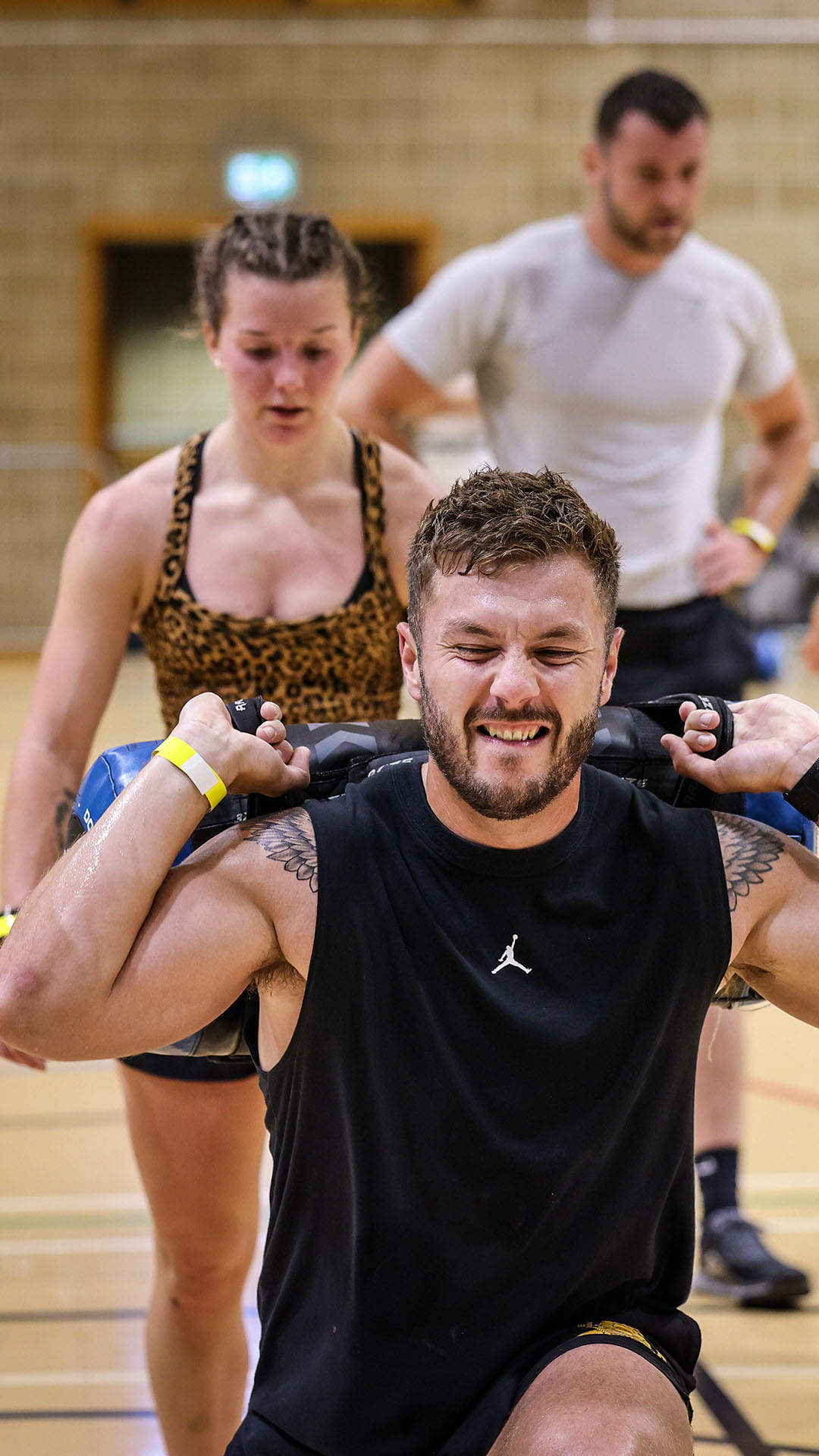
  • HMS DRAKE Wyvern Centre hosted a HYROX competition for military personnel.

    4 Week Fitness Plan

    If you’re unsure where to begin, our official 4 Week Fitness Plan provides a structured programme to help you prepare for the fitness assessments and Initial Training.

Got a question?

Need help finding your ideal role?
Our virtual recruiter is available to answer your questions 24 hours a day

Apply now

Find your place in the Royal Navy. Make friends for life, learn new skills and experience the world.

Start your application

Find your place in the Royal Navy. Make friends for life, learn new skills and experience the world.